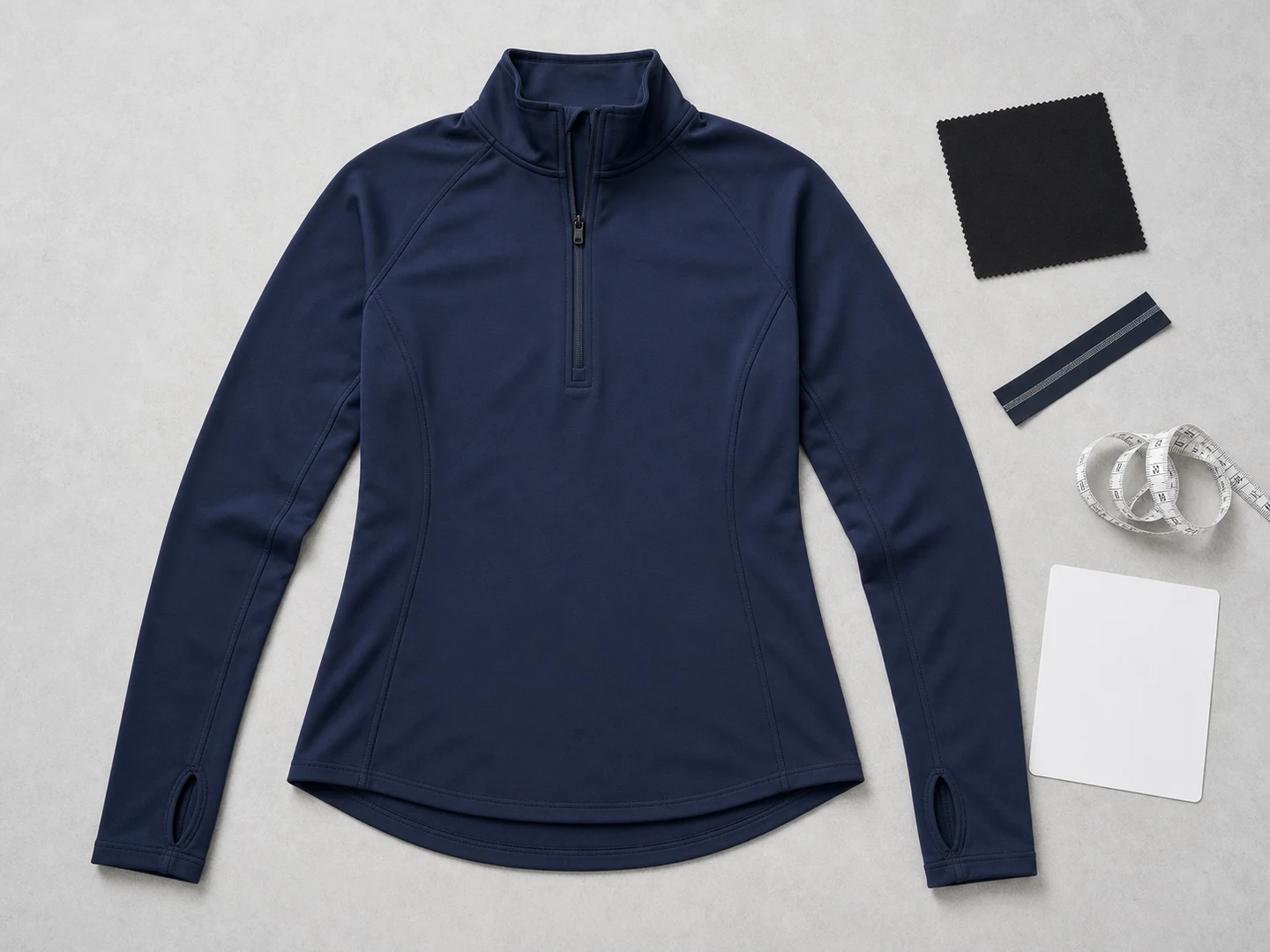
Give a factory more than a reference image. This completed example shows how to state what must stay recognizable, what may change, and what needs confirmation before sampling.
Why a reference image is not a supplier brief
A reference image cannot tell a supplier which detail matters most, which construction is negotiable, what price position is intended, or which performance claims require testing. Those gaps often become avoidable sample rounds.
This example uses a navy half-zip active top. The brief protects the stand collar, curved side panel, and clean athletic proportion while asking the supplier to recommend feasible fabric and seam options.
Completed supplier handoff
Navy half-zip active top
A studio-to-errand capsule sharing a stand collar, curved panel line, and matte performance surface.
- Target retail
- $64-$84 USD
- Initial order
- 300 units, 2 colors, subject to MOQ
- Core fabric
- 230-260 gsm matte stretch jersey
- Must preserve
- Collar proportion and curved side panel
Completed variant plan
V1. Hero half-zip top
Design change: Preserve the stand collar, half zip, curved side panel, raglan sleeve, and thumbhole cuff.
Selling point: A clean layer for warm-up, commute, and low-impact studio use.
Production risk: Zipper wave and collar collapse require compatible tape, fabric, and stabilization.
V2. Lightweight travel layer
Design change: Use a lighter quick-dry fabric, remove thumbholes, and simplify the side panel seam.
Selling point: Lower-bulk packing and faster drying for travel.
Production risk: Lighter fabric may show seam impressions or lose opacity under stretch.
V3. Brushed cold-weather edition
Design change: Use a brushed-back fabric and add a discreet zip pocket at the side panel.
Selling point: Seasonal warmth and secure storage without a bulky silhouette.
Production risk: Brushing, pocket bags, and zipper additions can change stretch and raise sewing time.
V4. Entry crew companion
Design change: Remove the zipper and stand collar while retaining the raglan sleeve and curved panel cue.
Selling point: Accessible entry price with clear visual connection to the hero top.
Production risk: Neckline recovery and rib compatibility must be tested after repeated wear and wash.
Questions to send with the first inquiry
- Can one base fabric support all four variants without compromising performance?
- What are the MOQ and lead-time differences for stock versus custom-color zippers?
- Which seam option gives the best balance of comfort, durability, and target cost?
- What physical tests can the factory provide before any performance claim is approved?
Download completed supplier PDF
Download editable DOCX template
Illustrative supplier brief, not a purchase order or final tech pack. Confirm quantities, specifications, commercial terms, testing, and compliance directly with the selected supplier.