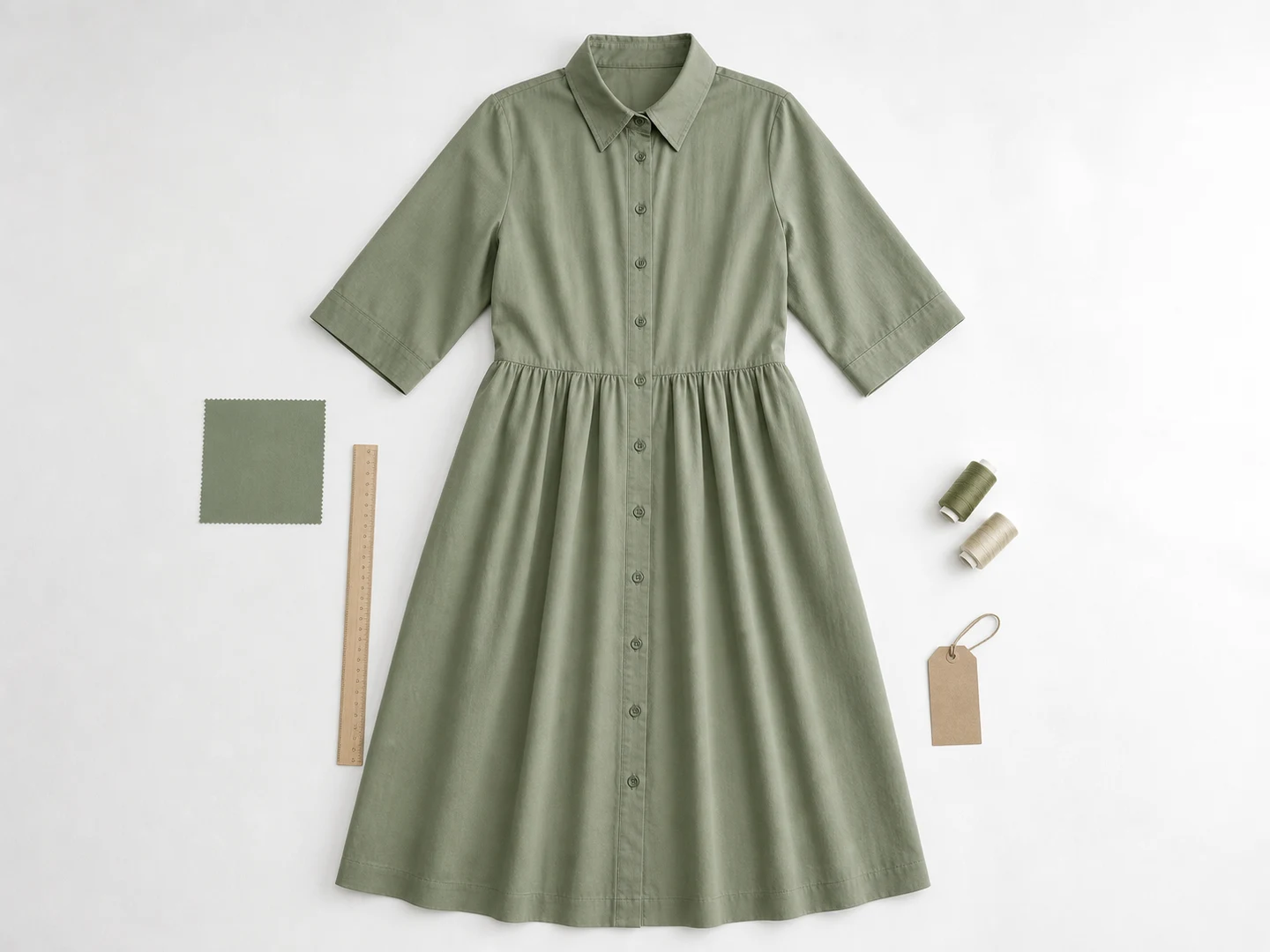
See how one shirt dress becomes a coherent small-brand capsule with a hero item, two companion products, and one controlled statement style.
Collection planning starts with assortment roles
A focused collection does not need many unrelated ideas. Each SKU should have a job: lead the story, widen the use occasion, reach an entry price, or create a stronger visual moment.
This illustrative capsule begins with a muted sage midi shirt dress for a small direct-to-consumer brand. The shared style DNA is a clean collar, soft natural texture, restrained waist definition, and calm utility-inspired color.
Completed plan: soft utility dress capsule
Target customer: women aged 30-45 who prefer understated, easy-care clothing for work, weekends, and travel. Target retail range: $72-$118 USD. Launch window: early autumn.
Commercial goal: keep one clear hero dress while adding a lower-price popover, a travel-focused dress, and a limited statement version that can support campaign imagery.
Completed collection plan
Soft utility dress capsule
A four-SKU early-autumn drop built around a muted sage palette, clean collar, and restrained waist definition.
- Customer
- Women 30-45, understated work and weekend style
- Retail range
- $72-$118 USD
- Launch window
- Early autumn
- Shared style DNA
- Soft utility, calm color, natural texture
Completed variant plan
V1. Hero midi shirt dress
Design change: Keep the collar, elbow sleeve, button front, gathered waist, and midi A-line skirt.
Selling point: The recognizable anchor for work, lunch, and weekend styling.
Production risk: Button placket stability and waist seam position must be checked across sizes.
V2. Popover entry dress
Design change: Shorten the placket, reduce skirt volume, and use a removable self belt.
Selling point: An easier entry price and relaxed pull-on feel.
Production risk: The shorter opening must still allow comfortable dressing without excess neckline width.
V3. Travel utility edition
Design change: Add discreet side-seam pockets and use a wrinkle-light blend with less waist gathering.
Selling point: Practical storage and cleaner packing for travel.
Production risk: Pocket bags can show through or distort the side seam in lighter fabrics.
V4. Limited contrast-stitch edition
Design change: Keep the hero body and add restrained contrast topstitching plus one seasonal accent color.
Selling point: Campaign-ready distinction without a new pattern block.
Production risk: Contrast stitching exposes inconsistent sewing and can increase rejection risk.
Collection-level risk controls
- Limit the first drop to two shared base colors until sell-through is known.
- Use one approved base block wherever possible to reduce fit inconsistency.
- Treat travel and easy-care claims as test-dependent, not copywriting assumptions.
- Confirm that statement details remain visible online without dominating the brand style.
Download completed collection PDF
Download editable DOCX template
Illustrative collection-planning example. Product performance, fit, costing, demand, and production feasibility have not been commercially validated.